
How Custom Delivery Bags Build Your Brand - Why Uber Eats, DoorDash and Wolt Partners Are Ditching Generic Boxes
1. Every Delivery Is a Brand Moment — Even the One You Never See
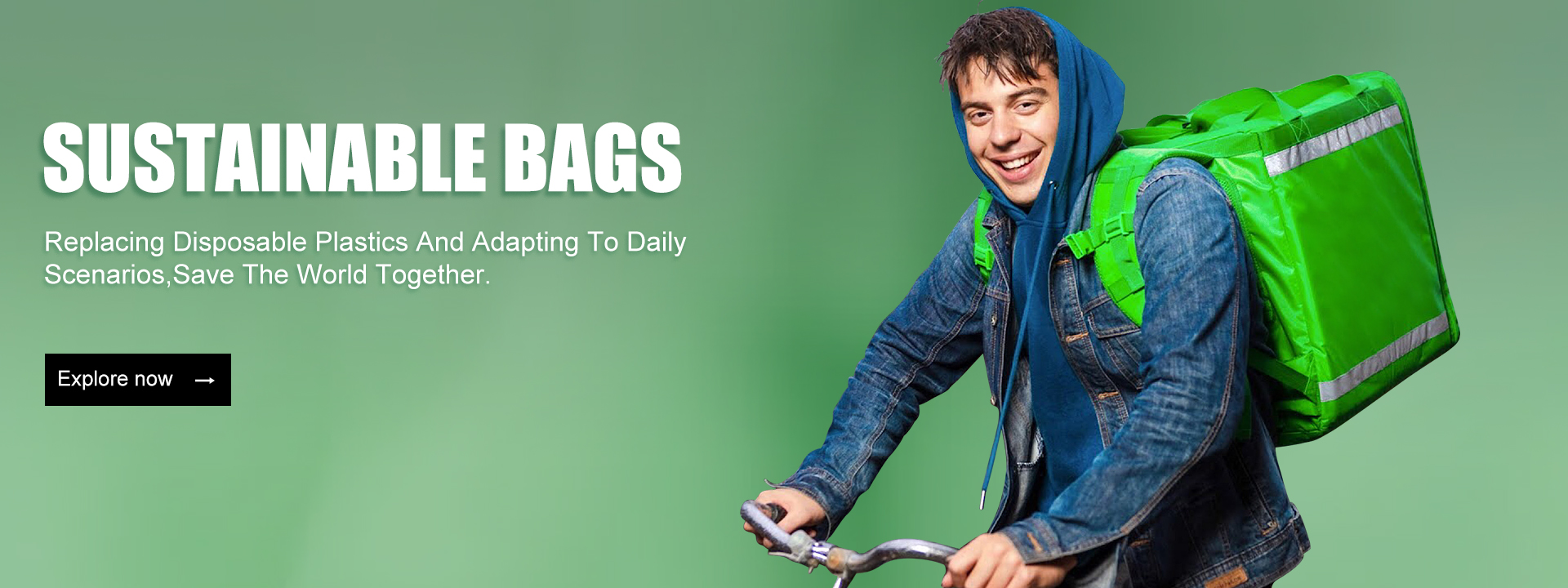
Think about the last delivery you watched arrive. A courier on an e-bike pulls up to the curb, unclips a bag, and walks toward the customer's door. In that moment, before a single container is opened, the customer has already formed an impression. Is the equipment clean and professional, carrying a logo they recognize from the app? Or is it a worn, unbranded box that looks like it came from a flea market?
That second version is far more common than most restaurant and fleet operators realize — and it is quietly working against them.
For riders working under Uber Eats, DoorDash, Wolt, Deliveroo, Just Eat or any of the major platforms, the bag is the one piece of brand equipment the customer actually sees. The food is hidden inside. The rider's jacket may or may not carry a logo. The bag is the visible promise — and when that promise looks generic, the brand looks generic too.
At Herisen, our manufacturing base has been building insulated bags and sustainable delivery gear since 2005, and since 2017 we have operated as Xiamen Herisen Commercial Co., Ltd. — a national high-tech enterprise serving markets across the UK, Germany, the USA, Japan, Russia and Australia. We have supplied OEM and ODM delivery bags to Uber Eats, Wolt, LALAMOVE, Zoomo, inDrive, Walmart and Coop. Along the way, we have watched the same mistake repeat itself: operators obsess over food cost, packaging cost and courier pay, while treating delivery gear as an afterthought.
This article is about why that afterthought is one of the cheapest brand investments you can make — and what a properly engineered, properly branded delivery bag actually does for your business.
2. The Quiet Cost of Generic Boxes
Let us start with the cost side, because that is where the argument usually gets lost.
A generic insulated box costs less per unit. That is the entire sales pitch. What that pitch hides is everything the box does to your operation over twelve months:
• Cold and soggy food. Thin foam and unsealed seams lose heat fast. If your average delivery takes 25–35 minutes in dense city traffic and your bag gives up in under 20, you are producing cold-food complaints at scale — refunds, one-star reviews and repeated order issues that platform algorithms on Uber Eats, DoorDash, Wolt and Deliveroo weight heavily.
• Frequent replacement. Low-cost bags fail in weeks, not years: zippers that jam, seams that split, foam that compresses permanently until the bag is just a shell. Every replacement cycle means new procurement, new inconsistencies and a period where some riders have working gear and others do not.
• Brand dilution. An unbranded bag is a missed impression on every street, lobby and doorstep it passes. Multiply one rider by a hundred deliveries a week, and a small fleet generates thousands of visible brand moments a month — all wasted.
When operators add these up, the "cheap" bag is usually the most expensive option in the fleet. The math only works if the bag never fails, never leaks and never makes the food arrive cold. No bag at any price can promise that — but a properly engineered one can make it rare.
3. Your Bag Is a Moving Billboard — and It Works 100% of the Time It Is in Sight
Marketing teams spend heavily on paid impressions. A branded delivery bag produces unpaid impressions every time a rider is in motion: crossing a busy street in London, waiting at a light in Berlin, climbing stairs in a Manhattan walk-up, pulling up to a café in Sydney.
Unlike a billboard, a delivery bag travels. Unlike a social post, it cannot be scrolled past. Unlike a discount code, it does not expire. A courier carrying a clean bag with your logo — or with the platform-branded gear your fleet agreement requires — is doing two jobs at once: delivering food and delivering brand visibility.
This is why the biggest operators treat gear as part of their identity system rather than as utility. Consistent, branded, professionally insulated equipment signals that the operation behind the delivery is organized and quality-conscious — before the customer opens the bag. It is also why OEM and ODM customization matters as much as insulation thickness. Herisen supports full branding programs on delivery bags: heat-transfer and screen-printed logos, embroidery, woven labels, rubber patches, custom colors matched to your identity, reflective strips for night visibility, and dimensions built around the specific packaging your kitchen actually uses.
You do not need to be a global chain to benefit. A regional pizza brand serving DoorDash neighborhoods, a ghost kitchen group running Deliveroo and Just Eat listings, or a catering company dispatching its own drivers under Grab or Foodpanda in Southeast Asia — every one of them is paying for visibility somewhere. The bag is the version of that spend that also protects the food.
4. The Science That Keeps the Brand Promise Warm
Branding gets the customer to open the bag. Engineering is what keeps them happy after they do. A delivery bag has one job above all others: holding food at the temperature the chef intended, from the kitchen to the door.
Herisen's delivery bag series achieves this with a layered construction rather than a single thick material:
• Outer shell built for the street. Waterproof tarpaulin and heavy 1680D polyester are the two core outer materials across our commercial range, with lighter models in 600D polyester/PVC. They resist rain, road dust, oil and the repeated contact of motorcycle racks and vehicle trunks.
• Insulation that traps heat. Models use 8mm to 20mm PE pearl foam depending on the application — for example the MU101 foldable delivery backpack uses 8mm insulation with an aluminium-foil interior on all six sides, while the HL-CLB401 box-style carrier combines 1680D fabric with 10mm PE foam, a PP board and aluminium foil in a 40×40×55cm format sized for catering loads.
• Foil that reflects heat back. Aluminium-foil lining bounces heat toward the food instead of letting it radiate outward, adding meaningful minutes to the safe-temperature window.
• Structure that survives hundreds of cycles. Thin foam compresses permanently after weeks of use, collapsing the insulation from the inside. Structural boards — like the PP board and corrugate hardboard used in our foldable and box-style models — keep the bag upright, protect the foam and preserve performance over hundreds of delivery cycles.
Under standard delivery conditions, our multi-layer bags maintain safe serving temperature for roughly two to three hours. That margin is what lets a rider complete a long cross-town trip in a rainstorm without turning a five-star kitchen into a two-star review.
5. Rain, Spills and Sixty Openings a Shift: Built for Reality
Photographs of bags look good in daylight. Reality is different: rain on a motorcycle rack, a leaking sauce container, a rider opening and closing the bag dozens of times per shift, a bag set down on wet pavement and greasy kitchen floors.
The failure points in cheap bags are predictable. Zippers jam or leak water. Seams wick moisture. Interior linings absorb spills and odors. Herisen specifies commercial-grade zippers with reinforced fabric at the ends of the zipper run, sealed and reinforced corner seams, and smooth, water-resistant interior linings that can be wiped down with disinfectant between shifts. Water slides off the tarpaulin exterior instead of soaking in; steam stays inside where the food is.
For food logistics providers operating in unpredictable climates — Nordic winters, UK drizzle, Southeast Asian monsoon seasons — this protection is not a premium feature. It is the difference between equipment that lasts a season and equipment that lasts years, and between food that arrives hot and dry versus food that arrives cold and damp.
6. Rider Ergonomics: Equipment That Keeps Your Best Couriers
There is a delivery-brand problem that has nothing to do with logos: rider fatigue. If a bag is heavy, awkward or badly balanced, the rider is slower, more frustrated and more likely to quit. In a market where experienced couriers are hard to find and harder to keep, gear that respects the rider is retention strategy.
Herisen's courier-focused models address the human element directly. The MU101 foldable delivery backpack opens to 47×35×47cm and folds flat to 47×25×47cm when empty — compact storage between shifts, with a wheeled base option for heavy multi-order loads. Padded shoulder straps and balanced load distribution keep weight off the rider's neck and shoulders over long shifts. Quick-access openings and easy-loading structures cut seconds off every pickup, and seconds compound across a hundred deliveries a week.
Equipment that works with the rider — instead of against them — shows up in on-time rates, order acceptance and courier retention. Those metrics eventually show up in your platform ratings, which is another way a bag investment pays for itself.
7. Sustainability Is Brand Equity: The rPET Advantage
Here is where delivery gear intersects with a conversation that customers are already having: packaging waste and the carbon footprint of convenience.
Recycled materials are no longer a niche selling point. Consumers increasingly notice — and reward — brands that take single-use waste seriously. For delivery operators, the equipment itself is part of that story. A courier bag made from recycled polyester (rPET) says something about the brand behind the delivery, and it says it every single shift.
Herisen has specialized in sustainable bags since our manufacturing base opened in 2005. Recycled materials run through our delivery and cooler bag catalog — 210D and 300D rPET in compact courier formats, lightweight rPET for foldable models, and combinations that balance durability, insulation and recycled content. Our products comply with REACH for the EU market and CPSIA for the US market, and our facilities operate under the ISO9001 quality management system.
For a brand that already talks about sustainability in its marketing — or wants to start — specifying rPET delivery gear is a way to make the story visible, literally on the street. And because our rPET models are available with the same full OEM/ODM branding programs as conventional materials, choosing sustainable does not mean choosing generic.
8. From One Approved Sample to a Fleet of Ten Thousand: Consistency Is the Real Product
The most dangerous moment in any equipment purchase is the transition from sample to bulk. A supplier can produce one beautiful prototype. The question is whether they can produce ten thousand units with the same dimensions, the same materials, the same print quality — and deliver them when they said they would.
Herisen's production model is built for exactly that question:
• One self-owned factory with equity-sharing partnerships with sister factories, giving us control over quality and the flexibility to scale.
• Monthly production capacity above 50,000 pieces across food delivery bags, cooler bags, logistics bags and outdoor bags.
• A complete in-house chain — product design, R&D, production, quality inspection, sales and after-sales service — so buyers never have to chase subcontractors to find out who actually made their bags.
• A 24-hour responsive sales and support team of twelve representatives, backed by leadership with over two decades of experience in the bag industry.
Once a design is approved, the approved sample becomes the fixed reference for every future production run. Our quality system checks each batch against it — the same fabric weight, the same insulation thickness, the same logo placement — order after order. That is the practical meaning of "factory direct": consistent quality, faster problem resolution, and no middleman margin between you and the people who make the product.
9. Certification and Compliance: Trust That Buyers Can Verify
When you buy delivery gear for a fleet that operates under a platform like Uber Eats, Wolt, DoorDash or Deliveroo, the equipment must meet the standards of the markets where those platforms operate — and your own buyers and partners increasingly ask to see proof.
Herisen operates as a national high-tech enterprise with ISO9001 quality management certification. Our products comply with REACH for the EU and CPSIA for the US market, fully meeting the requirements of our primary export markets in Europe and North America. For buyers sourcing at scale, these credentials translate into simpler customs clearance, fewer compliance surprises and a defensible answer when a platform or retail partner asks where the gear comes from and under what conditions it was made.
10. How Custom Gear Actually Happens: Samples, MOQ and a Warranty That Means Something
If this article has made the case for branded, engineered delivery gear, the practical question is how to get there without a painful procurement process. Here is how it works with Herisen:
Step 1 — Specification. Share your packaging dimensions, typical order combinations, delivery environment (motorcycle, e-bike, car, bicycle), average shift length, and any branding requirements. We recommend the right materials, insulation thickness, opening design and structural configuration — and quote against it.
Step 2 — Sample. Sample production takes as little as 5 working days (7–12 working days typical including courier delivery), at USD 100 per design, refunded once the order is confirmed. We encourage buyers to stress-test the sample: load real packaging, open and close the zipper repeatedly, simulate rain, and clean the interior.
Step 3 — Production. MOQ is 300 pieces, applicable to both catalog models and fully customized designs. Bulk production runs 45–50 days after deposit and sample approval. Payment terms: 30% deposit by T/T, balance against shipping documents. Price term: FOB Xiamen.
Step 4 — Repeat orders. Your approved specification becomes the fixed reference for every future order. Quality stays consistent, lead times stay predictable, and your branding stays exactly where you approved it — on a bag that is also doing marketing work for you every time a rider is on the road.
And because equipment that fails early is the real cost driver, our delivery bags carry an average warranty of 180 days of commercial use — backed by the material choices (tarpaulin and 1680D polyester outers, structural boards, commercial-grade zippers) that make early failure the exception rather than the rule.
FAQ — Branded Custom Delivery Bags
Q1: Can Herisen produce delivery bags branded for our restaurant, ghost kitchen or delivery fleet?
Yes. We support full OEM and ODM branding: heat-transfer and screen-printed logos, embroidery, woven labels and rubber patches, custom colors matched to your identity, reflective strips, and dimensions built around your actual packaging. We have supplied OEM/ODM delivery bags to Uber Eats, Wolt, LALAMOVE, Zoomo, inDrive, Walmart and Coop, and we are experienced in meeting the equipment specifications major delivery platforms expect.
Q2: Are your bags suitable for Uber Eats, DoorDash, Wolt or Deliveroo riders?
Our bags are engineered for the real conditions of platform delivery — multi-layer insulation, waterproof outers, commercial-grade closures and ergonomic carrying systems used by couriers across the UK, Germany, the US, Japan, Russia and Australia. We recommend sharing your platform, market and typical packaging so we can match dimensions and insulation to your operating environment.
Q3: How long does a Herisen delivery bag keep food warm?
Under standard delivery conditions, our multi-layer insulated bags maintain safe serving temperature for roughly two to three hours, depending on ambient temperature, opening frequency and the insulation thickness specified (8mm to 20mm PE foam across the range). Our average warranty period is 180 days of commercial use.
Q4: Can you use recycled materials with custom branding?
Yes. Recycled polyester (rPET) runs through our delivery and cooler bag catalog in 210D and 300D weights and lightweight foldable formats, and our rPET models support the same full OEM/ODM branding programs as conventional materials.
Q5: What is the minimum order quantity?
MOQ is 300 pieces, applicable to both standard catalog models and fully customized designs.
Q6: How much do samples cost and how fast can I get one?
Sample charge is USD 100 per design, refunded once the order is confirmed. Minimum sample time is 5 working days; typical delivery is 7–12 working days including courier shipment.
Q7: What is the lead time for bulk production?
45–50 days after deposit receipt and sample approval. Monthly production capacity exceeds 50,000 pieces, which keeps lead times consistent even for large orders.
Q8: What materials are used in your delivery bags?
Commercial ranges use waterproof tarpaulin and 1680D polyester outer shells (600D polyester/PVC on lighter models), 8–20mm PE pearl foam insulation, aluminium-foil interior lining, and PP board or corrugate hardboard structural supports. Recycled rPET versions are available across the catalog.
Q9: What certifications does Herisen hold?
ISO9001 quality management certification, with products compliant with REACH (EU) and CPSIA (US). We operate as a national high-tech enterprise in Xiamen, China, with a complete in-house production chain.
Q10: Which markets does Herisen serve?
Our primary markets are the UK, Germany, the USA, Japan, Russia and Australia, with food delivery bags, cooler bags, logistics bags and outdoor bags shipped through our self-owned factory and partner production lines.
Q11: How do I start a custom delivery bag project?
Contact us at sales13@herisen.com or call +86-592-5590393. Share your packaging dimensions, fleet size, delivery environment and branding requirements. We will advise on the right configuration, provide a quotation and arrange sample production.
Xiamen Herisen Commercial Co., Ltd. — sustainable delivery gear manufacturer since 2005. OEM/ODM supplier to Uber Eats, Wolt, LALAMOVE, Zoomo, inDrive, Walmart and Coop. ISO9001 certified. REACH and CPSIA compliant. Monthly capacity 50,000+ pieces. FOB Xiamen.
Contact: sales13@herisen.com | +86-592-5590393
