
How to Develop a Multi-Purpose Delivery Backpack for Food, Groceries, Parcels, and Last-Mile Delivery
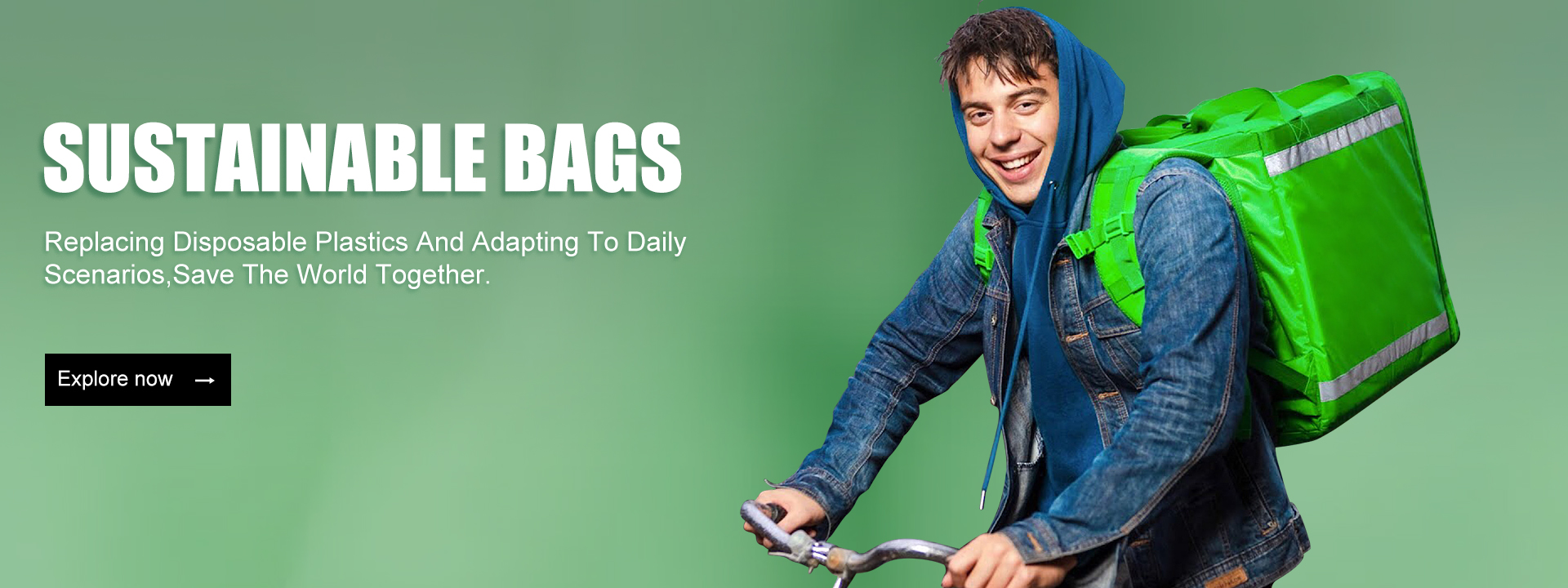
How to Develop a Multi-Purpose Delivery Backpack
for Food, Groceries, Parcels, and Last-Mile Delivery
By Herisen Commercial Co., Ltd. | Xiamen, China | sales13@herisen.com
1. The Real Brief: One Backpack, Four Cargo Types
A delivery operator sends a straightforward request: build one backpack that can carry hot food in the morning, groceries at midday, a parcel in the afternoon, and documents in the evening.
On paper this looks like a sizing question. In practice it is a conflict-resolution problem. Each cargo type pulls the design in a different direction:
• Hot food wants insulation, a wipe-clean lining, and a shape that keeps boxes flat.
• Groceries want volume, a strong base, and stability when the load is irregular and heavy.
• Parcels want flexible internal space and abrasion resistance on the walls.
• Documents want a flat, protected compartment where folders do not slide under a food container.
Add a fleet requirement — one specification across every rider, whether they work Uber Eats, Wolt, Deliveroo, DoorDash, Just Eat, Grab, or LALAMOVE routes — and the design has to satisfy all four cargo types without becoming a bag that does none of them well.
At Herisen, our manufacturing base has produced insulated bags since 2005, and our food delivery bag catalog now covers more than thirty models with nominal capacities from roughly 17 liters to 130 liters.
2. "54 Liters" Rarely Means 54 Liters of Usable Space
Volume is the first specification buyers quote and the first one that misleads them. If a backpack is built to external dimensions of 45 x 40 x 30 cm, its theoretical rectangular volume is 54 liters — but a finished insulated backpack does not give you 54 liters of usable interior space, because insulation foam (8mm to 20mm), the foil or PEVA lining, structural support boards, seams and zipper construction, the bottom panel, and any internal dividers all consume room inside the shell.
In our catalog that distinction is written into the specification itself. The HL-CLB516 is listed with two states: 42 x 42 x 42 cm extended and 42 x 27 x 42 cm non-extended — nominally 74.1L and 47.6L. The HL-CLB404/406/407 follow the same logic: 44 x 44 x 50 cm expanded and 44 x 24 x 50 cm folded — nominally 96.8L and 52.8L. The folded state of that model lands within touching distance of a 54L brief, before insulation is deducted.
The correct size is therefore decided by cargo, not by a volume calculation. For food service, we need the meal box dimensions. For grocery work, we need to know whether the load is supermarket bags, bottles, boxed goods, or a mix. For parcels, the typical carton footprint matters. And sizing has to account for the rider: too wide interferes with motorcycle handling; too deep moves the load behind the rider and creates leverage; too tall raises the center of gravity.
3. Material Selection for Mixed Cargo
Once the size is agreed, the material system determines how long the backpack survives. Herisen's delivery bag catalog is built on three outer materials, chosen by use case:
Outer Material | Where It Fits | Catalog Examples |
1680D polyester | Heavy loads, all-weather routes, high-abrasion duty | HL-CLB401 (40x40x55cm), HL-CLB402 (45x45x50cm), HL-CLB515 (39x39x46cm) |
Waterproof tarpaulin | Rain exposure, motorcycle and e-bike delivery, easy cleaning | HL-CLB404/406/407 (foldable), HL-CLB408 (52x52x48cm), HL-CLB411 (44x44x53cm) |
600D polyester / PVC | Lighter daily routes, T-divider configurations | HL-CLB415 (33x31x34cm, T-shape divider), HL-CLB312-1 (40x33x30cm, T-shaped divider) |
Insulation thickness is matched the same way — 6mm PE foam on the thinnest-insulation model (HL-CLB418), 8mm and 10mm across most of the HL-CLB4xx series, 15mm sponge foam on HL-CLB417, and 20mm PE foam on the heavier-duty HL-CLB515 and HL-CLB415. Every one of those bags also carries PP support boards and aluminum foil lining.
The aluminum foil lining is not only a thermal layer. Because it is smooth and stain-resistant, it wipes clean in seconds — which is what makes a food-grade bag usable for parcels and grocery loads without carrying yesterday's smell into today's delivery.
The support board decides whether the bag still looks professional in month six. A soft 54L backpack collapses inward when partially loaded: boxes tilt, parcels shift, and the zipper becomes hard to close because the walls fold into the opening.
4. Structure Without Weight
The obvious answer to a collapsing bag is more rigidity. The obvious answer is wrong, because a backpack with thick rigid panels on every wall is heavy, bulky, hard to fold, and uncomfortable over a full shift. Selective reinforcement is the workable approach — and it is visible in how our catalog models are built:
• Base support carries the load. Heavier models such as HL-CLB401 and HL-CLB515 pair 1680D exteriors with 20mm foam and PP boards.
• Side walls stay upright without becoming rigid. Most HL-CLB4xx models use a PP board layer between the outer fabric and the foam.
• Movable structure where cargo changes. HL-CLB425 uses a PP board internal movable divider.
• Removable load-bearing hardware. The MU101 foldable backpack adds four wheels on the base so heavy multi-order loads roll instead of being dragged.
There is also a freight consequence buyers rarely price in: if the structure can be removed or the bag can collapse flat, carton volume drops. Herisen's foldable models are packed accordingly — the MU101 ships 5 pieces per carton in a 50 x 50 x 50 cm box, while the foldable backpack line runs 50 or 100 pieces per carton in cartons as compact as 38 x 36 x 36 cm.
5. The Parts Riders Actually Touch
Zippers, straps, handles, and the back panel fail first because they are used most.
Closures. The MU101 uses a 10# YKK zipper in the main compartment, with the fabric reinforced at the ends of the run. On a busy route the bag is opened fifty to a hundred times a day — often one-handed.
Handles. The MU101 carries a strong PP webbing handle in the middle of the top flap at 4cm wide x 50cm long. Width is not cosmetic: a narrow handle concentrates the entire load into a small stitched area, which is exactly where a bag starts to tear.
Shoulder straps. The MU101 uses shoulder straps with pearl foam padding and an adjustable buckle. On the foldable backpack line, strap width is specified too — the HL-PB033 carries a 5cm x 76cm shoulder strap, and the HL-PB031 is rated to a 15kg load.
Back panel. A flat coated surface traps heat and moisture against the rider in warm climates. Padding and airflow matter on longer routes, and are worth deciding at prototype stage rather than after a fleet complaint.
6. Modular Interiors: Making One Bag Serve Four Cargo Types
The single most effective answer to multi-purpose delivery is not a bigger bag. It is an interior that changes. Permanent dividers solve one cargo type and block the rest; a completely empty interior creates the opposite problem. Herisen builds both patterns, and the catalog shows where each belongs:
• Fixed separation for single-purpose fleets: HL-CLB415 and HL-CLB312-2 use T-shaped dividers sized for multi-compartment meal configurations.
• Movable separation for mixed-cargo fleets: HL-CLB425 uses a PP board internal movable divider that can be repositioned or removed when a large parcel needs the whole chamber.
• Pocket systems for the small items that slow riders down: the MU101 includes a mesh pocket inside and outside, plus three internal dividers.
For an operator running restaurant, grocery, and parcel work on the same fleet, removable components are usually the right compromise. One backpack adapts to the day's work instead of requiring separate equipment per delivery type — which raises equipment utilization across every revenue stream the fleet serves.
7. Foldable Formats: Storage, Freight, and Rider Turnover
Folding is not a gimmick. It solves three separate commercial problems.
• Vehicle and back-of-house storage. Herisen's foldable delivery bags run from 96.8L expanded down to 52.8L folded on the HL-CLB404/406/407, and 74.1L to 47.6L on the HL-CLB516.
• Export packing density. A backpack that packs flat occupies less carton volume per unit, which lowers freight cost per piece on large orders.
• Equipment lifespan. A bag that stores compactly is handled more carefully and crushed less often.
The foldable backpack line covers 25 models from 27 x 14 x 41 cm to 49 x 18 x 38 cm, in 300D snow canvas, 190T/200D/210D/210T/300D polyester and ripstop constructions, including RPET options (HL-PB031 uses 300D RPET).
8. Branding That Survives the Street
For a delivery company, the backpack is part of the uniform. Branding decisions we handle at specification stage:
• Printing method matched to fabric. Heat transfer, screen printing, embroidery, woven labels, and rubber patches behave differently on tarpaulin, 1680D polyester, and 600D PVC. Adhesion is confirmed during sampling.
• Placement that stays visible when loaded. The MU101 carries white logo printing on the front and both sides.
• Color as identification, not decoration. Contrast panels, piping, webbing, and zipper pulls make a bag recognizable at distance.
• Reflective elements for night visibility.
9. What to Check on the First Prototype
A prototype exists to answer questions, not to prove a factory owns a sewing machine. For a multi-purpose backpack, we recommend loading it in six ways before approving production:
1. Capacity in practice — load the actual meal boxes, grocery bags, parcels, and document packs, then confirm usable internal dimensions after insulation and boards.
2. Structure under load — does it stand upright when partially loaded, and does the base stay stable at realistic weight?
3. Rider comfort — a real rider wears it loaded for an extended period; check strap position, balance, width, and lower-edge interference.
4. Access speed — open and close the zipper repeatedly, load and unload quickly, and confirm removable dividers adjust in seconds.
5. Water and cleaning — controlled water testing on the exterior, then wipe the interior after a leaking container.
6. Stress points — strap attachment points, top handle, buckle stitching, zipper ends, bottom corners, and board edges.
Then confirm branding, and only then scale. Small corrections at sample stage are cheap; the same correction after 3,000 units is a different conversation.
10. Scaling from 300 to 50,000 Pieces
Custom development only matters if the factory can repeat it at volume. Herisen's production base is built for that:
• MOQ 300 pieces — enough for a pilot fleet, low enough to test a specification properly.
• Sample charge USD 100 per design, refundable once the order is approved. Minimum sample time 5 working days; standard 7-12 working days.
• Lead time 45-50 days after deposit and sample approval; average delivery cycle around 55 days.
• Monthly capacity above 50,000 pieces, from one self-owned factory plus equity-sharing sister factories.
• 520,000+ delivery bags shipped in the past 12 months, alongside 340,000 cooler bags and 250,000 outdoor bags.
• 20+ new delivery bag models developed per year, with new-product development possible in as little as two weeks.
• Average warranty of 180 days — the number that matters most to buyers replacing cheap bags every quarter.
• ISO9001 quality management; products comply with REACH and CPSIA.
• Payment: 30% T/T deposit, balance against shipping documents. Price term: FOB Xiamen.
Once a specification is approved, it becomes the fixed reference for every repeat order — which is the only way a fleet stays consistent as it adds riders, cities, and delivery categories.
11. Who Already Runs Herisen Gear
Our bags have been tested in exactly this kind of daily commercial use by operators who cannot afford downtime. Herisen supplies OEM and ODM delivery bags to Uber Eats, Wolt, LALAMOVE, Zoomo, inDrive, Walmart, and Coop.
Our export revenue in the past twelve months exceeded USD 10,000,000, with Western Europe at 65% — the core market for Deliveroo, Wolt, Just Eat, and Uber Eats operations — Northern Europe at 17% and North America at 18%, covering DoorDash, Uber Eats US, and LALAMOVE routes. We also serve Japan, Russia, and Australia.
We are a national high-tech enterprise based in Xiamen, founded in 2017, with a manufacturing base in the insulated bag industry dating to 2005. Twelve sales representatives provide 24-hour service to customers worldwide.
12. FAQ — Custom Multi-Purpose Delivery Backpack
Q1: Can one backpack really handle food, groceries, parcels, and documents?
Yes, but the interior must stay flexible. Remove movable dividers and a full chamber opens for parcels; keep them and the bag separates meal boxes and drinks. Combined with a reinforced base, a stain-resistant aluminum foil lining, and side or front pockets for documents, one backpack can serve all four cargo types without permanently limiting its volume.
Q2: Can Herisen supply a 54L-class insulated delivery backpack?
Yes. Volume depends on whether the figure refers to external dimensions or usable internal space — insulation, linings, and support boards all consume room. Our closest standard models in that size class are the foldable HL-CLB404/406/407 (44 x 44 x 50cm expanded, 44 x 24 x 50cm folded) and the HL-CLB516 (42 x 42 x 42cm expanded, 42 x 27 x 42cm folded). For a specific internal volume, we size from your actual cargo.
Q3: What is the minimum order quantity?
MOQ is 300 pieces, for both catalog models and fully customized designs.
Q4: How much does a prototype cost, and how long does it take?
Sample charge is USD 100 per design, refundable once the order is confirmed. Minimum sample time is 5 working days; standard delivery is 7-12 working days.
Q5: What materials do you use for multi-purpose delivery backpacks?
1680D polyester and waterproof tarpaulin are our two core outer materials, with 600D polyester/PVC for lighter models. Insulation runs from 6mm to 20mm PE foam depending on the model, with PP support boards and aluminum foil or PEVA lining. No Tyvek or uncoated fabrics are used in our delivery bag range.
Q6: Can the dividers be removed?
Yes. HL-CLB425 uses a PP board internal movable divider, and our fixed T-divider models (HL-CLB415, HL-CLB312-1, HL-CLB312-2) are available for fleets that need permanent separation instead.
Q7: Can you print our logo on the backpack?
Yes. We support heat transfer, screen printing, embroidery, woven labels, and rubber patches, plus custom colors, reflective elements, and color blocking. The MU101 ships with white logo printing on the front and both sides. Adhesion on coated fabrics is confirmed during sampling.
Q8: What is the lead time for 500 or 1,000 pieces?
45-50 days after deposit and sample approval, with monthly capacity above 50,000 pieces, so lead times stay stable as volume grows.
Q9: Which certifications do you hold?
ISO9001 quality management; products comply with REACH (EU) and CPSIA (US).
Q10: How do we start a development project?
Send your cargo dimensions, maximum expected load weight, transport method (motorcycle, e-bike, bicycle, or car), insulation expectations, and branding files to sales13@herisen.com or call +86-592-5590393. We will advise on sizing, materials, structure, and pockets, then produce a prototype for real-world testing.
Xiamen Herisen Commercial Co., Ltd.
Custom delivery backpack and insulated bag manufacturer since 2005
OEM/ODM supplier to Uber Eats | Wolt | LALAMOVE | Zoomo | inDrive | Walmart | Coop
ISO9001 | REACH | CPSIA | FOB Xiamen
sales13@herisen.com | +86-592-5590393
