
Engineering High-Frequency Fleet Logistics: Why Large Capacity Food Delivery Bags Need Removable Hard Panels
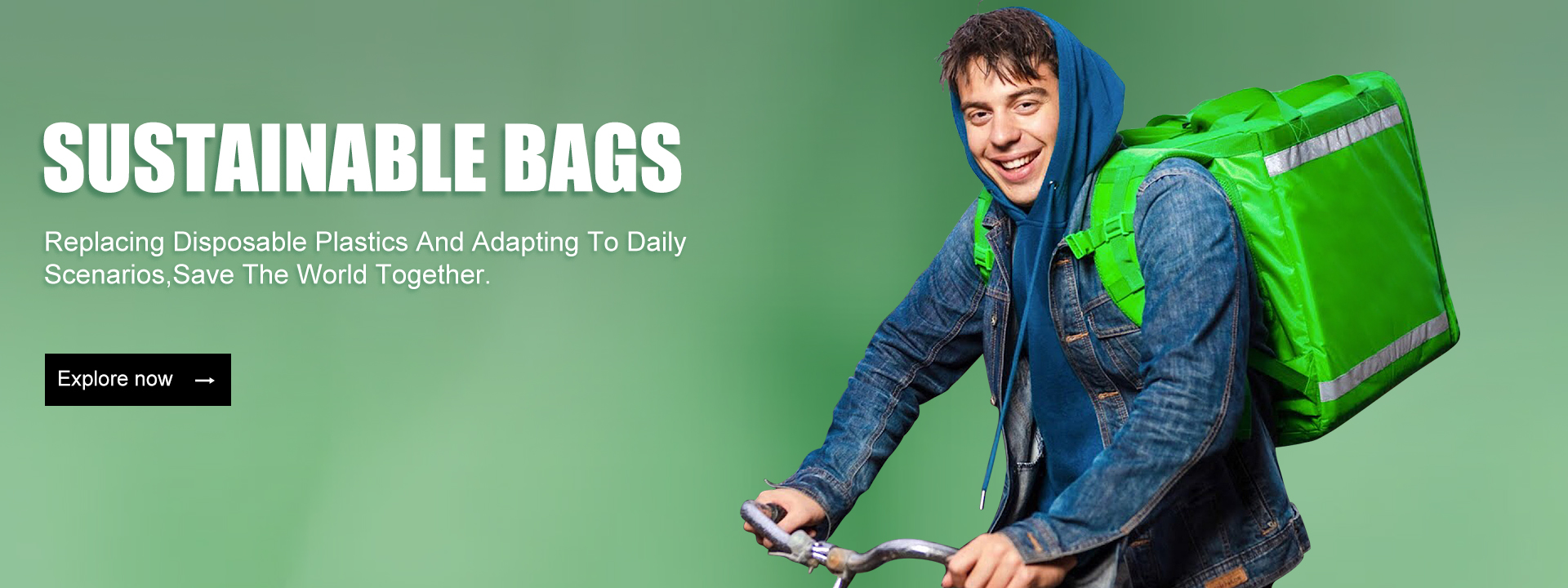
In commercial last-mile food logistics, bag volume alone does not determine delivery success. When delivery bags expand past 50 to 80 liters to accommodate stacked meal containers, family-size catering boxes, beverage cups, and multiple customer orders, the operational challenge fundamentally shifts.
The primary challenge is no longer simply whether everything fits inside. It is whether the bag can maintain its structural integrity without sagging at the base, caving in at the sidewalls, crushing delicate paper containers, or tipping drink carriers during transit.
A completely soft insulated tote may appear functional in a catalog photo, but load it with 10 to 15 kilograms of hot meals and chilled drinks, and structural failure quickly reveals itself. Sidewalls buckle under load, top boxes press down on soup containers, and base sag tilts beverages.
For commercial fleets and high-volume delivery operations, the solution lies in semi-rigid engineering: pairing heavy-duty exterior shells with removable hard internal panels. This design approach balances the structural rigidity of a hard motorcycle delivery box with the lightweight flexibility, cleanability, and flat-pack shipping efficiency of a soft commercial bag.
—————————————————————————————————————————————
1. Soft Bags vs. Rigid Boxes vs. Semi-Rigid Architecture
Delivery operators historically faced a difficult compromise between two extremes:
Feature | Conventional Soft Insulated Bag | Fixed Rigid Plastic / Fiberglass Box | Semi-Rigid Delivery Bag with Removable Panels |
Shape Retention Under Load | Poor; walls buckle and base sags when loaded | Excellent; permanent rigid shell | Superior; maintains rigid 3D form under heavy weight |
Unloaded Weight | Very light (1.0–1.8 kg) | Heavy (5.0–9.0 kg); adds rider fatigue | Optimized (2.5–3.8 kg); ergonomic balance |
Internal Cleaning & Sanitation | Difficult around tight foam corners | Washable, but bulky to manipulate | High; panels slide out for complete sanitization |
Damaged Part Replacement | Whole bag discarded if internal wall bends | Costly shell repair or replacement | Damaged internal PP panel replaced in seconds |
Shipping & Storage Volume | Folds flat; low freight cost | Massive carton cube; high sea/air freight costs | Folds completely flat when panels are removed |
Vehicle Mounting & Carrying | Backpack or loose strap only | Hardtail bike/scooter mount only | Backpack straps, side handles, & vehicle D-rings |
A fully soft bag offers easy folding, but lacks the support needed for multi-tier catering orders. Conversely, rigid molded boxes provide great protection, but their fixed cubic volume results in exorbitant international shipping freight and massive warehouse footprints.
A semi-rigid structure utilizing removable hard panels (such as hollow-core polypropylene PP sheets or composite PE boards) bridges this gap. It provides firm planar support across all critical axes while allowing the entire bag to fold flat during overseas transit and fleet warehousing.
—————————————————————————————————————————————
2. How Removable Hard Boards Solve Durability and Maintenance
Permanent internal reinforcement sewn directly into the lining of a delivery bag creates severe maintenance headaches. Once grease, spilled soup, or condensation seeps into stitched crevices, permanently sealed boards cannot be removed for thorough sanitization. Furthermore, if a heavy impact warps a sewn-in board, the entire delivery bag must be written off.
A engineered removable panel system addresses these operational vulnerabilities:
1. Precision Zippered or Velcro Sleeves: High-density PP panels slide securely into dedicated internal compartments along the back, front, sidewalls, and base. They remain locked during transit without shifting or rubbing against food containers.
2. Effortless Deep Sanitation: Fleet cleaning crews can unzip the sleeves, slide out the rigid boards, and thoroughly spray down or sanitize the interior foil lining without waterlogging the internal boards.
3. Modular Part Replacement: If a courier accidentally damages a single side panel, fleet managers can swap in a replacement board costing pennies rather than replacing a complete $40–$60 delivery backpack.
4. Optimized Export Freight (CBM Reduction): Removing the boards allows the outer shells and panels to pack flat into export cartons. This can reduce carton volume by up to 40% to 55%, dramatically lowering per-unit container shipping costs from factory to destination hubs.
—————————————————————————————————————————————
3. High-Density 15mm Thermal Core: Balancing Retention and Payload
As delivery bag volume expands to 60L, 75L, or 80L+, thermal dynamics become far more demanding. A larger chamber contains a greater volume of ambient air, a broader external surface area exposed to environmental extremes, and longer opening times while couriers sort multiple tickets.
Basic 5mm or 8mm foam commonly used in budget consumer bags is completely inadequate for 30- to 45-minute commercial delivery windows.
A heavy-duty commercial bag utilizes 10mm to 15mm high-density thermal insulation (such as EPE pearl cotton or closed-cell PE foam) coupled with heat-reflective interior lining:
· Thermal Barrier: The dense foam cell structure slows conductive and convective heat transfer even when exterior ambient temperatures plunge below freezing or exceed 35°C in summer.
· Physical Impact Cushioning: The thick foam layer acts as a mechanical shock absorber between the outer shell and the inner hard boards, protecting glass beverage bottles and fragile pastry packaging from road vibrations and cobblestone shocks.
· Food-Grade Reflective Lining: Heavy-duty reinforced aluminum foil or wipe-clean food-contact PEVA reflects radiant heat back toward food containers while preventing sauces from penetrating into the insulation layer.
—————————————————————————————————————————————
4. Multi-Order Route Efficiency: The Science of Internal Dividers
In urban delivery hubs, couriers rarely carry a single ticket. High-frequency dispatchers batch multiple orders per route to optimize economics. Stacking unseparated customer orders in a single open cavity is a recipe for crushed boxes, mixed-up tickets, and temperature cross-contamination.
Engineered internal divider systems transform a large delivery chamber into an organized multi-zone workstation:
· Hot & Cold Thermal Partitioning: Thick insulated dividers allow couriers to separate piping-hot pizzas or noodle soups from chilled salads, sushi, or cold bottled drinks in the same trip.
· Load Stability on Partial Runs: When a courier drops off the first order, the remaining packages tend to slide around in an oversized empty bag. Adjustable horizontal and vertical dividers lock remaining containers firmly in place against braking and turning forces.
· Dedicated Beverage Isolation: Specialized modular beverage cup holders or drink dividers keep 500ml–1000ml takeaway drink cups perfectly vertical, eliminating the risk of lid displacement and catastrophic spills over food packaging.
—————————————————————————————————————————————
5. Heavy-Duty Materials: Waterproof Tarpaulin vs. 1680D Ballistic Polyester
Commercial delivery equipment endures unrelenting abuse from asphalt surfaces, metal bike racks, torrential downpours, and kitchen oil splatters. Material selection must match the specific operational climate and fleet aesthetic.
Commercial 500D–900D Waterproof PVC Tarpaulin
· Performance: 100% waterproof exterior, high tear strength, superior puncture resistance, and seamless wipe-down maintenance.
· Best For: Rainy coastal markets, intense urban bicycle/motorcycle courier fleets, and operations requiring maximum grease and grime resistance.
1680D Ballistic Polyester with Water-Resistant PU/PVC Backing
· Performance: Professional matte textile appearance, exceptional abrasion resistance against friction wear, and excellent structural drape.
· Best For: Premium catering delivery, corporate lunch logistics, and fleets seeking a refined urban aesthetic.
Water-Resistant Zipper & Closure Engineering
Standard nylon coil zippers fail quickly under repetitive commercial tension. High-frequency bags require heavy-duty SBS or YKK water-resistant PU-taped zippers paired with oversized zipper pulls that riders can easily grasp while wearing winter riding gloves. Where split-second handovers are critical, supplementary magnetic closures or quick-release buckles keep flaps positioned securely between immediate drop-offs.
—————————————————————————————————————————————
6. Ergonomic Architecture: Handles, D-Rings, and Protective Base Feet
A 70-liter bag fully loaded with food containers can weigh upwards of 15 to 20 kilograms. How that load is lifted, secured, and set down dictates both equipment lifespan and rider safety:
· Reinforced Dual Side Grab Handles: Reinforced box-x stitched webbing handles on both side panels allow restaurant staff and couriers to lift heavy catering loads smoothly with two hands, preventing improper lifting by the zipper flaps.
· Heavy-Duty Steel / Cast D-Rings: Strategically positioned D-rings reinforced with cross-stitched seatbelt-grade webbing provide secure anchor points for motorcycle and scooter rear-rack tie-down straps.
· Molded Base Protective Feet & Anti-Abrasion Runners: Setting delivery bags down on wet concrete curbs, kitchen tile, or gravel rapidly abrades bottom seams. High-profile molded rubber/PVC bottom feet lift the fabric off dirty ground, preventing moisture seepage and abrasive seam failure.
· Ergonomic Padded Backpack Harness: For bicycle and scooter riders, breathable 3D mesh shoulder straps with adjustable chest sternum clips and padded lumbar support distribute heavy loads across the courier’s skeletal frame.
—————————————————————————————————————————————
7. Optimizing Delivery Bags for Global Platform Ecosystems
Commercial food delivery operators around the world work within or alongside major on-demand delivery ecosystems. While each platform has distinct brand recognition, fleets supporting Uber Eats, DoorDash, Deliveroo, Wolt, Just Eat, Glovo, Grubhub, Foodpanda, GrabFood, and Meituan share identical core operational demands:
· DoorDash & Catering Drivers: Large footprint requirements to hold 14-inch to 16-inch horizontal pizza boxes, half-pan aluminum catering trays, and multi-cup drink carriers without tilting.
· Uber Eats & Deliveroo Urban Couriers: Versatile dual-mode bags capable of switching between rear motorcycle mounting and ergonomic backpack carry for high-density pedestrian/apartment deliveries.
· Wolt & Glovo Cold-Climate Fleets: Maximum insulation thickness (12–15mm), weather-sealed zipper flaps, and high-visibility reflective piping conforming to European road safety directives (EN 13356 / EN ISO 20471 reference standards).
· Grocery & Dark Store Dispatches: Removable vertical and horizontal dividers to segregate heavy canned goods, fragile eggs, fresh bakery items, and chilled dairy within a single carrier.
Trademark Contextual Disclaimer: Third-party platform names (Uber Eats, DoorDash, Deliveroo, Wolt, Glovo, Just Eat, Grubhub, Foodpanda, GrabFood, Meituan) are referenced solely for operational context and delivery workflow description. Herisen is an independent OEM/ODM manufacturer; mentioning these platforms does not imply official affiliation, direct sponsorship, or exclusive partnership.
—————————————————————————————————————————————
8. What B2B Fleet Buyers Must Test Before Bulk Production
Before approving a production run of 1,000 to 10,000 custom delivery bags, commercial fleet managers and procurement directors should subject pre-production prototypes to a rigorous five-step stress test:
5. Static Base Deflection Test: Load the bag with 15 kg of evenly distributed dead weight. Suspend the bag by its top handles or mounting points and measure base center deflection. A properly reinforced PP panel should deflect less than 12 mm.
6. Thermal Drop Profiling: Place hot food containers (starting at 75°C) into the bag in a 5°C ambient test chamber. Record internal temperatures at 15, 30, 45, and 60 minutes. High-grade 15mm foam with foil lining should keep meals above 60°C for at least 45 minutes under normal closure conditions.
7. Seam & D-Ring Tensile Stress: Subject shoulder straps, side grab handles, and D-ring tie-down points to repetitive 25 kg dynamic pull tests to verify that stitching does not pull through the outer fabric or tear seam tape.
8. Leak Containment & Sanitization Cycle: Pour 500 ml of liquid into the bottom liner. Verify that no liquid penetrates into the internal foam or through exterior base seams. Remove the hard boards, clean the interior with commercial disinfectant wipes, and evaluate dry time.
9. Fold-and-Recovery Resilience: Remove hard boards, fold the outer shell completely flat, compress it under heavy weight for 48 hours to simulate ocean freight shipping, then reassemble with panels. Inspect corners for creasing cracks or zipper misalignments.
—————————————————————————————————————————————
9. How Herisen Supports Custom OEM/ODM Fleet Development
Developing an exceptional commercial delivery bag requires deep manufacturing engineering, not merely off-the-shelf bag stitching.
Xiamen Herisen Commercial Co., Ltd. operates as a dedicated OEM and ODM manufacturing partner with bag-making roots extending back to 2005 (incorporated in 2017). Based in Xiamen, China, Herisen combines robust industrial infrastructure with comprehensive international compliance standards.
Core Factory & Manufacturing Strengths:
· Dedicated Delivery Bag Capacity: Proven production capability reaching ~50,000 delivery and logistics bags per month, supported by automated cutting, skilled heavy-duty sewing lines, and specialized ultrasonic/welding equipment.
· International Social & Quality Audits: Fully certified under BSCI (Business Social Compliance Initiative) social standards and ISO 9001:2015 quality management systems.
· Chemical & Environmental Compliance: Materials can be tailored to meet stringent European and North American regulatory mandates, including REACH (SVHC), CPSIA, EN 71, and GRS (Global Recycled Standard) for recycled polyester and eco-friendly rPET tarpaulin.
· Rapid Prototyping Speed: Rapid sample turnaround in as little as 5 to 7 business days for qualified custom delivery bag projects.
· Reliable Lead Times & Port Logistics: Standard bulk production lead time of 45 to 55 days after sample confirmation, shipped directly through Xiamen Port (XIAMEN PORT) with direct shipping lines to major European, North American, and Asia-Pacific ports.
· Commercial Warranty Backing: Average 180-day commercial quality warranty on workmanship and construction, reflecting our commitment to fleet-grade durability.
Whether your fleet requires custom Pantone-matched tarpaulin, tailored cup holder inserts, laser-cut PP structural panels, or silk-screen/heat-transfer logo branding, Herisen’s engineering team translates operational requirements into durable, cost-effective equipment.
—————————————————————————————————————————————
Frequently Asked Questions (FAQ)
Q1: Why are removable hard panels superior to sewn-in structural boards?
Removable panels allow delivery bags to fold completely flat for ocean freight and compact fleet storage, reducing shipping volume by up to 50%. They also allow internal panels to be removed for deep sanitization or replaced individually if damaged, significantly extending overall bag service life.
Q2: What thickness of thermal insulation foam is recommended for multi-order delivery?
For commercial routes lasting 30 to 60 minutes with multiple stops, a 10mm to 15mm high-density EPE pearl cotton or closed-cell PE foam core is strongly recommended. Thin 3mm–5mm foams lose thermal retention rapidly upon repeated door openings.
Q3: Can Herisen customize delivery bags for specific restaurant containers or pizza sizes?
Yes. As an OEM/ODM manufacturer, Herisen customizes internal dimensions, divider configurations, panel thicknesses, beverage holder diameters, and exterior shell fabrics based on your exact packaging dimensions and vehicle mounting methods.
Q4: Are these delivery bags 100% waterproof in heavy rain?
While heavy-duty PVC tarpaulin fabric is inherently 100% waterproof, water can enter through needle stitching holes or standard zippers during prolonged downpours. Herisen offers water-resistant PU-coated zippers, overlapping rain flaps, and welded seam options to achieve high rain-resistance suited for motorcycle and bicycle couriers.
Q5: What is the minimum order quantity (MOQ) and sample lead time?
Typical custom OEM/ODM delivery bag development has a sample turnaround of 5 to 7 business days. Production MOQs typically start from 300 to 500 units depending on custom material and color requirements, with volume scale up to 50,000 units per month.
